What are the key components of a 3D printer?
Taking desktop 3D printers as an example, their key components include the frame, drive motors, nozzle, build plate or platform, stepper motors, adjustment belts, electronic components, and software.
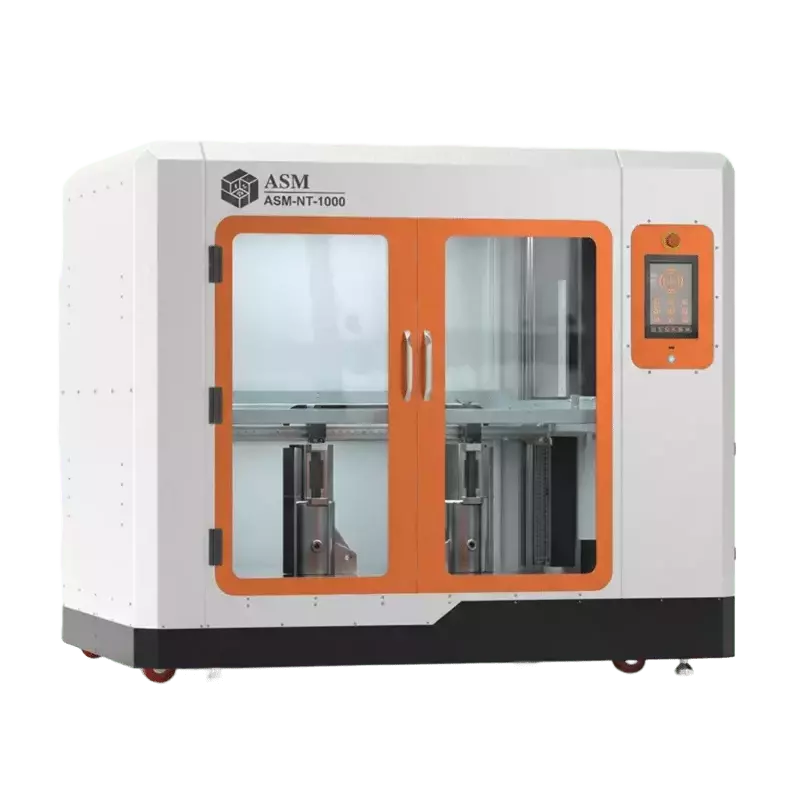
1. Frame: The frame serves as the backbone of a 3D printer. Generally, industrial printers are encased in gray plastic, whereas home printers are not. Early models used wooden frames, but most modern ones are made of acrylic or metal. Frame designs include open, semi-open, and enclosed types. The advantage of an enclosed design is that it helps maintain a consistent printing environment temperature, keeps dust out, and prevents burns to the hands.
2. Drive Motors: Drive motors are located above the nozzle. Their primary function is to move the nozzle along the path planned by the software. Additionally, they can rotate. Since 3D printers require rotation to extrude material through the nozzle, drive motors are more suitable for 3D printers than standard DC motors.
3. Nozzle: The nozzle’s primary function is to heat the material and then use the motor’s force to extrude the filament at a specific speed. Most printers use nozzles with a 0.4 mm orifice diameter. The smaller the nozzle orifice, the higher the precision and the better the product quality. The larger the nozzle orifice, the faster the printing speed. Most printer nozzles are interchangeable, so users can install the desired nozzle according to their needs.
4. Build Plate or Platform: The build plate is where the model is formed. Vertical movement during the printing process depends on the printing technology. For 2D printers, the paper serves as the build plate. Heating requirements depend on the material used. Some materials require heating during printing to prevent issues such as warping of the base layer. Build plates commonly used in the market are made of aluminum or glass. Aluminum has the advantage of being easy to heat, while glass offers a flatter surface and is easier to maintain.
5. Stepper Motors: A printer typically includes at least four stepper motors. Their key functions are to control print speed and positioning. If the print speed is too fast, it may result in overly thin filament or gaps in the product. If it is too slow, it may cause certain parts of the product to become bulky or bulge.
6. Lead Screws: In a 3D printer, lead screws control the movement of the motors along the X and Y axes. They essentially determine the print speed and precision. Check the tension of the leadscrews before printing, as loose leadscrews can easily interfere with print quality. Checking the leadscrews is part of the setup process for many printers.
7. Software: Although software is not a physical component of a 3D printer, it plays a crucial role in the 3D printing process. The software converts imported images or designs into G-code. The machine then prints the object based on the generated G-code. Some software automatically generates support structures to provide better support for the object during printing.
